CASE FILE
In/Active Investigation
Osnabrück
1490s–2026
Crime Board Display
Krahnstraße 57, 49074 Osnabrück
Osnabrück has been designated a crime scene. Preliminary investigations confirm evidence of ongoing criminal activity that predates the Peace of Westphalia in 1648. What has long been celebrated as peace, order and civic history also conceals structures of extraction, commodification and violence.
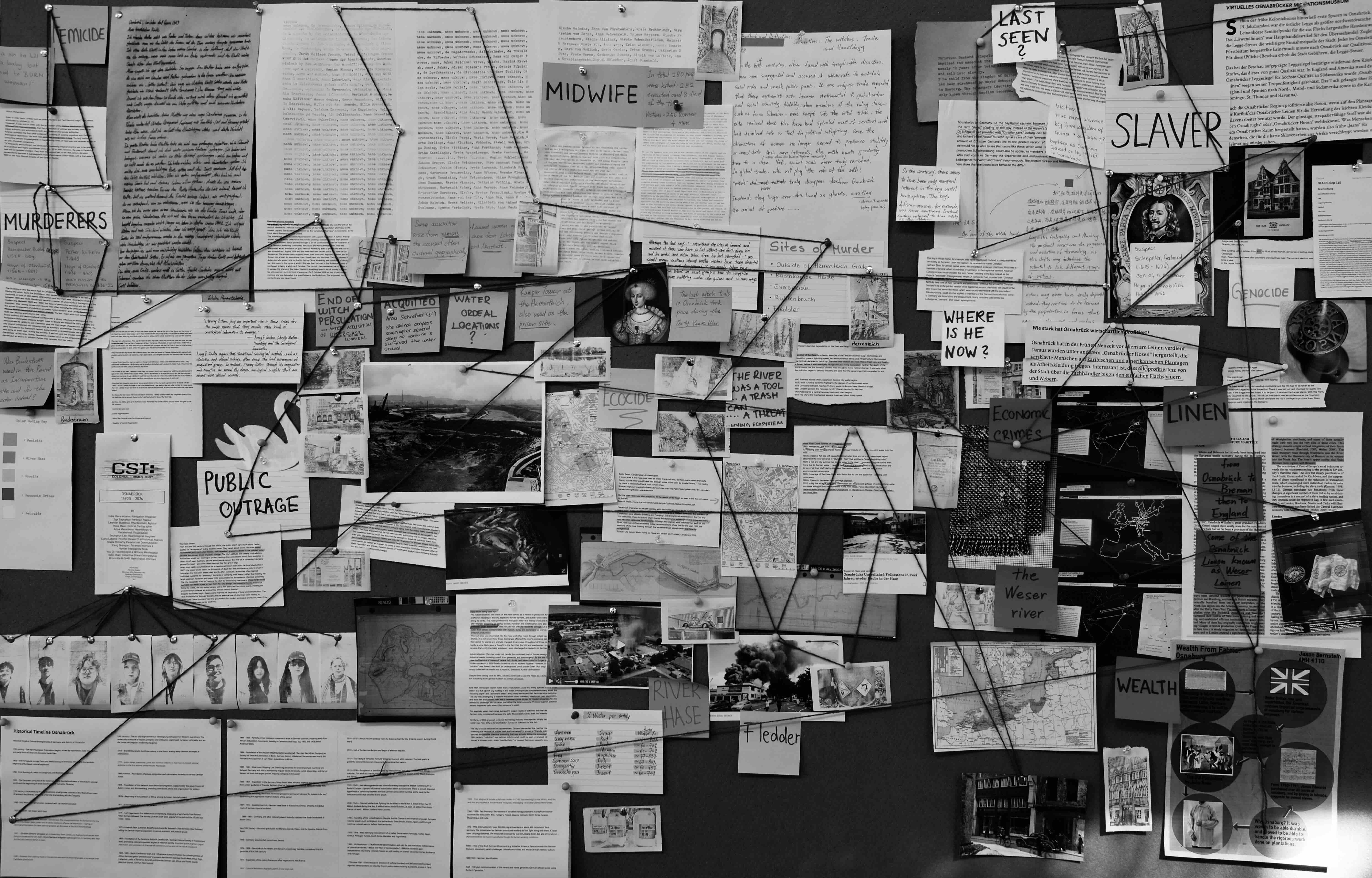
Documentation of the crime board assembled during the investigation into colonial, economic and hydropolitical continuities in Osnabrück.
ARCHIVAL DOCUMENTATIONINVESTIGATION FILES
Case Summary
City of Peace
Osnabrück is recognised as a “City of Peace,” yet its civic identity conceals economic histories entangled with colonial crimes.
Osnaburg Fabric
The production and export of osnaburg fabric relied on systems of extraction, trade and the labour of enslaved Africans.
Coffee & Tobacco
The import of coffee and tobacco connects local commerce to colonial supply chains and global exploitation.
Invisible Criminal History
The Colonial Crimes Unit investigates why these histories remain largely invisible and how they continue in the present.
Hydropolitical Evidence
The Hase and other water-based sites are treated as possible witnesses to regulation, violence and historical residue.
Speculative Forensics
Speculative research methodologies and forensic technologies are deployed to expose hidden continuities.
Public Access
The public is invited to engage in the investigations through crime scene routes, guided tours and evidence-board encounters in the old town.
Open Questions
If witch drowning tests were not simply a form of religious hysteria, was the Hase complicit?
Can the river challenge a history of hydropolitical regulation?
Why does this criminal history remain invisible, and in what forms does it continue in the present?